Intercultural communication
Understanding the context
How do cultural differences influence communication, leadership, feedback, decision-making and trust?
Explore different expectations, make sense of behaviour and look beyond stereotypes.
Intercultural communication consulting and SOCIAL STYLE® training
Cultural expectations and individual communication styles shape the way we work together. Understanding both helps us communicate more clearly and collaborate more effectively across borders.
Prefer a conversation? Book a 20-minute video call
Not necessarily. Sharing a language doesn’t mean sharing the same cultural expectations.
The same words. Different meanings.
Some of the most damaging misunderstandings happen when we assume we’re on the same page.
Cultural expectations and individual styles often lie beneath the surface. Learning to recognise them can make all the difference.
Among the top (26) skills identified by the World Economic Forum in the Future of Jobs Report 2025, as many as 8 can be classified as power skills and can be developed through greater cultural awareness.
You may know your IQ. But what about your CQ, your Cultural Quotient? It’s the ability to turn the challenge of cultural diversity into a competitive advantage, and it starts with awareness.
Five workplace situations. Several possible readings. A few surprises along the way.
Culture matters, but it never tells the whole story. Individual behavioural styles matter too. My approach brings these perspectives together, taking account of the individual, social and cultural levels at play in professional relationships.
Understanding the context
How do cultural differences influence communication, leadership, feedback, decision-making and trust?
Explore different expectations, make sense of behaviour and look beyond stereotypes.
Understanding people
Even people who share a cultural background may communicate in very different ways.
Using TRACOM’s SOCIAL STYLE® & Versatility model, learn to recognise behavioural styles and adapt your approach to the people you work with.
TRACOM-accredited facilitator
The integrated approach helps us challenge snap judgements, recognise and reduce bias, and work together more effectively.
For multicultural teams, managers, HR professionals and anyone working with international colleagues, clients or partners.
Overseas offices, team communication, leadership and cross-border business relationships.
For people working internationally, relocating abroad or starting a professional career in Italy.
Understand the unwritten rules of a new environment and communicate with greater confidence.
For researchers, lecturers and academic staff working in international environments.
Research collaboration, communication norms, organisational hierarchies and multicultural teams.
A message that lands badly. A meeting where no one voices disagreement. Two colleagues who struggle to work together because their communication styles are worlds apart.
These are the situations I start with.
Real-life examples, case studies, guided discussions and practical exercises.
There is no universal formula for every culture or person. The most useful tools are awareness, observation and flexibility.


TRACOM-accredited SOCIAL STYLE® & Versatility facilitator.
Training has been delivered both through direct partnerships and in collaboration with specialist training providers.
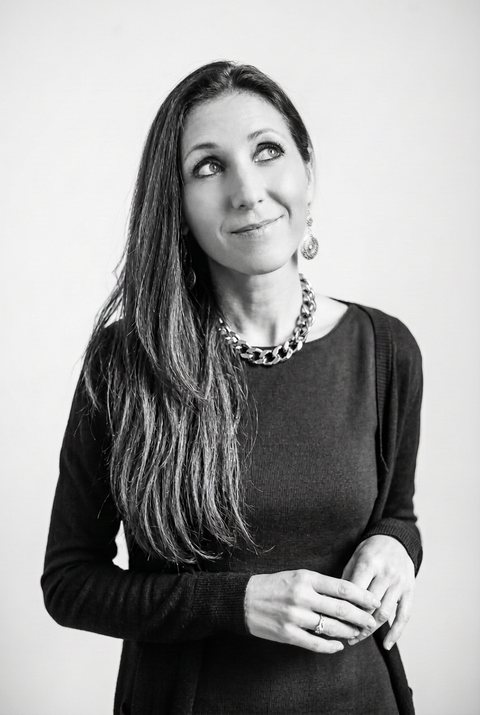
Interpreter, translator, consultant and trainer.
I graduated from the University of Trieste’s Advanced School of Modern Languages for Interpreters and Translators and in 2001 founded my agency specialising in translation and multilingual communication. For over 25 years, at Linklab, I have worked with companies, institutions and professionals operating internationally.
Working as an interpreter and language mediator has given me a front-row view of something that is easy to overlook: when people from different cultures communicate, real understanding depends on far more than the words they use.
That experience sparked my professional interest in intercultural communication, which I now combine with training in behavioural styles.
I collaborate with MIB Trieste School of Management and Learnlight, and I am a TRACOM-accredited SOCIAL STYLE® & Versatility facilitator. I have also complemented my education with specific courses in intercultural communication and international business etiquette.
My work draws on practical experience, established frameworks and, above all, the real needs of the people I work with.
Looking to train a team or tackle a professional challenge? Let’s start here.